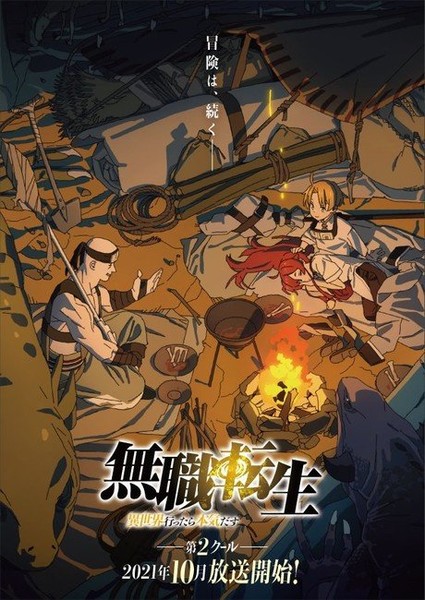
If Solo Leveling is a power fantasy, Mushoku Tensei is something entirely different: it is a “Life Fantasy.” It is widely considered the grandfather of modern Isekai (the “trapped in another world” genre), even though its anime adaptation arrived later than most.
It is a viral sensation not just because of its beauty, but because of its brutal honesty. It is a story about the messy, uncomfortable, and ultimate journey of redemption.
1. Not a Hero, But a Human (With Flaws)
The story begins with a 34-year-old shut-in, a man who failed at life in our world. When he dies and is reborn as Rudeus Greyrat in a world of magic, he doesn’t suddenly become a saint.
- The Realism of Failure: Rudeus carries the trauma, perversions, and social anxieties of his past life.
- The “Second Chance”: This isn’t about saving the world from a Demon King; it’s about a man trying his absolute hardest not to waste his life a second time. Watching him grow from a deeply flawed infant into a capable man is one of the most rewarding character arcs in fiction.
2. The Gold Standard of Worldbuilding
While many Isekai feel like “Generic Video Game World #5,” the world of Mushoku Tensei feels lived-in.
- Culture & Language: Rudeus actually has to learn the languages of the new world. It’s not a magic translation; it’s a barrier he has to overcome.
- History & Lore: The “Six-Faced World” has thousands of years of history, gods, and legends that feel as solid as Tolkien’s Middle-earth.
- Geography: From the Holy Kingdom of Millis to the Demon Continent, every location has its own rules, food, and social hierarchy.
3. Production Quality That Defies Logic
To adapt this story, a dedicated studio called Studio Bind was literally created specifically for Mushoku Tensei.
- Cinematography: The anime doesn’t just show magic; it shows the atmosphere. The lighting, the dust motes in the air, and the vast landscapes make it feel like a high-budget fantasy film.
- Visual Storytelling: The direction often tells the story through environment and body language rather than just dialogue, making it a “prestige” anime experience.
Comparison: Why Mushoku Tensei Is the “Grandfather”
| Feature | Mushoku Tensei | Standard Isekai |
|---|---|---|
| Main Character | Deeply flawed, seeks self-growth | Overpowered, generic “good guy” |
| Magic System | Scientific and grounded | “Shout the spell name” |
| Pacing | Slow-burn (Years of life pass) | Fast (Straight to the action) |
| Romance | Complex and messy | Standard Harem tropes |
Exportovať do Tabuliek
4. The “Turning Point” Phenomenon
Mushoku Tensei is famous for its Turning Point episodes. Just when you think you’ve settled into a cozy “Slice of Life” rhythm, the story throws a catastrophic event that completely resets the stakes. These moments (like the “Mana Calamity”) are legendary in the community for how they shift the genre from comedy to survival horror in a single heartbeat.
5. A Story About Family and Legacy
At its heart, this is a multi-generational epic. It deals with:
- The complicated relationship between Rudeus and his flawed father, Paul.
- The fear of being found out for who he really was.
- The legacy we leave behind. It asks the audience: If you were given a clean slate today, would you have the courage to actually change?
The Verdict
Mushoku Tensei is a masterpiece that comes with a warning: it is a “warts-and-all” look at a man’s soul. It can be uncomfortable, but that discomfort makes the moments of triumph and genuine emotional connection feel earned.
It is the definitive Isekai. It is a breathtaking, epic, and deeply personal journey of a man who stopped being “jobless” and started being human.
The journey doesn’t start at the end of the world. It starts at the beginning of a life. 🧙♂️📖✨
Images used in this article are property of their respective owners (e.g. Shueisha Studio MAPPA) and are used for review purposes