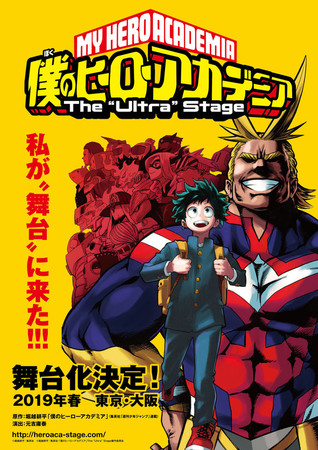
If Attack on Titan is a descent into darkness, My Hero Academia (Boku no Hero Academia) is the soaring, neon-lit explosion of hope that defined a generation. It took the classic Western superhero trope, infused it with Japanese “Shonen” heart, and created a viral powerhouse that asks one fundamental question: “Are you born a hero, or do you become one?”
In a world where 80% of the population has “Quirks” (superpowers), MHA isn’t just about fighting villains—it’s about the burden of the symbol.
1. The Underdog Story for the Ages
At the center of the storm is Izuku “Deku” Midoriya, a boy born “Quirkless” in a world obsessed with power.
- His journey isn’t a “get rich quick” scheme for strength; it’s a grueling, bone-breaking climb.
- Deku represents every person who was told “No” by society. When the world’s greatest hero, All Might, tells him, “You too can become a hero,” it wasn’t just a line in a script—it was a viral moment that moved millions of viewers to tears.
2. All Might: The Weight of the Symbol
Unlike many series where the mentor stays in the background, All Might is a masterpiece of character writing.
- He is the “Symbol of Peace,” but he is also a dying man holding on by a thread.
- The series explores the terrifying vacuum left behind when a “God” retires. It turns a superhero story into a fascinating study of legacy and societal collapse.
3. A Gallery of Complex Rivals
MHA thrives on its ensemble cast. It doesn’t just focus on the hero; it gives us:
- Katsuki Bakugo: A subversion of the typical rival. He’s loud, aggressive, and arrogant, but his arc toward humility and true leadership is one of the best-written “slow burns” in anime history.
- Shoto Todoroki: A tragic backstory of family abuse and the struggle to reclaim one’s own identity.
- The League of Villains: Led by Shigaraki, the villains aren’t just “evil.” They are the products of a hero-saturated society that failed them. They are the “trash” the world tried to sweep under the rug.
Comparison: Why MHA is the Ultimate Crossover
| Feature | My Hero Academia | Traditional Superhero Comics |
|---|---|---|
| Growth | Characters age and learn in school | Status quo often resets |
| Consequences | Injuries are permanent and scars stay | Heroes often heal magically |
| Villains | Deeply tied to the hero’s philosophy | Often “Villain of the week” |
| Vibe | High-energy school life + Dark war | Mostly vigilante justice |
Exportovať do Tabuliek
4. The “Plus Ultra” Animation
Produced by Studio BONES, the series is a masterclass in kinetic action.
- The fights aren’t just about punching; they are about strategy.
- Iconic moments like All Might vs. All For One or Deku vs. Overhaul set the internet on fire with their vibrant colors, emotional soundtracks (thanks to Yuki Hayashi), and “edge-of-your-seat” stakes.
5. From School Life to Total War
What started as a charming “High School” anime has evolved into a full-scale societal war. The later seasons (The Paranormal Liberation War arc) stripped away the safety of the classroom, forcing these teenagers to grow up in a world where the line between “Hero” and “Monster” has blurred.
The Verdict
My Hero Academia is the perfect entry point for fans of Marvel or DC, but it offers a level of emotional depth and character progression that Western comics often struggle to maintain. It is a vibrant, emotional, and eventually haunting look at the price of protecting others.
It’s not just about having a power. It’s about what you do when your body says “stop” and your heart says “Go Beyond.”
PLUS ULTRA! 🦸♂️💥
Images used in this article are property of their respective owners (e.g. Shueisha Studio MAPPA) and are used for review purposes